Hide and Seek Billion Dollar Edition: How Banks Are Vulnerable To The Sanctioned Ownership
Team ArgusLoop
12 November 2026 · 5 Mins
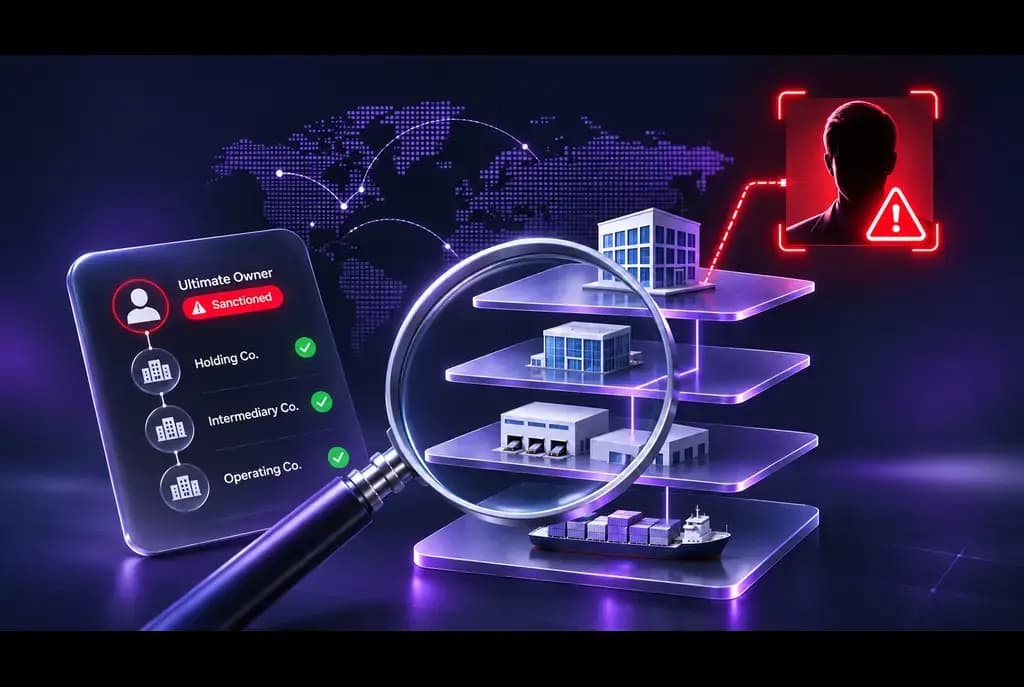
Introduction: The Owner Who Was Never on the Account
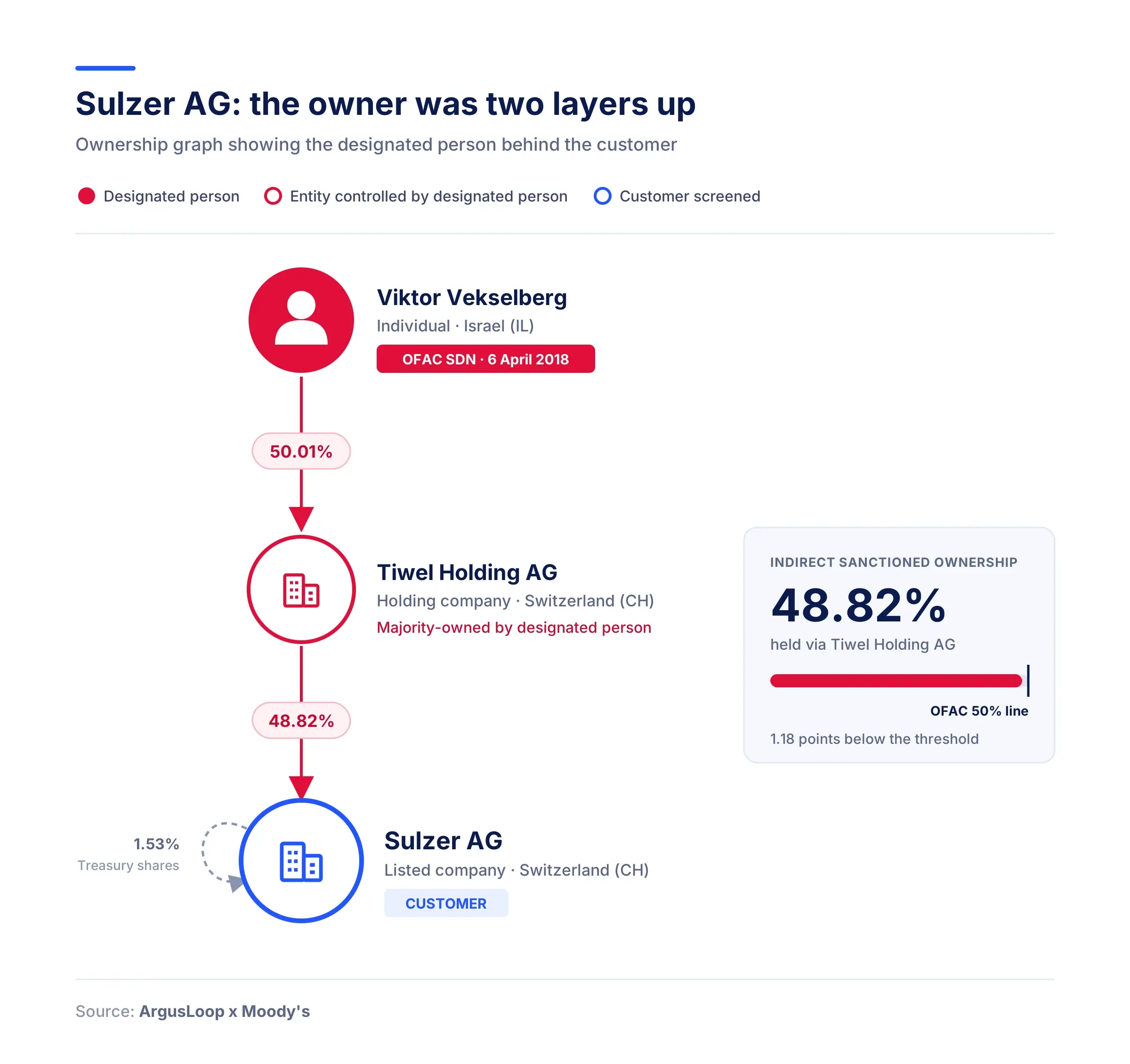
April 2018, The US Treasury adds seven Russian oligarchs to its sanctions list. Within hours, screening engines in banks around the world re-run their checks, and a listed Swiss engineering group called Sulzer comes back clean. Its name appears on no list. By next week, its American bank accounts were frozen.
Nothing about Sulzer had changed except the person at the top of its share register. That is the central paradox of modern sanctions compliance. The customer passes screening; the owner does not.
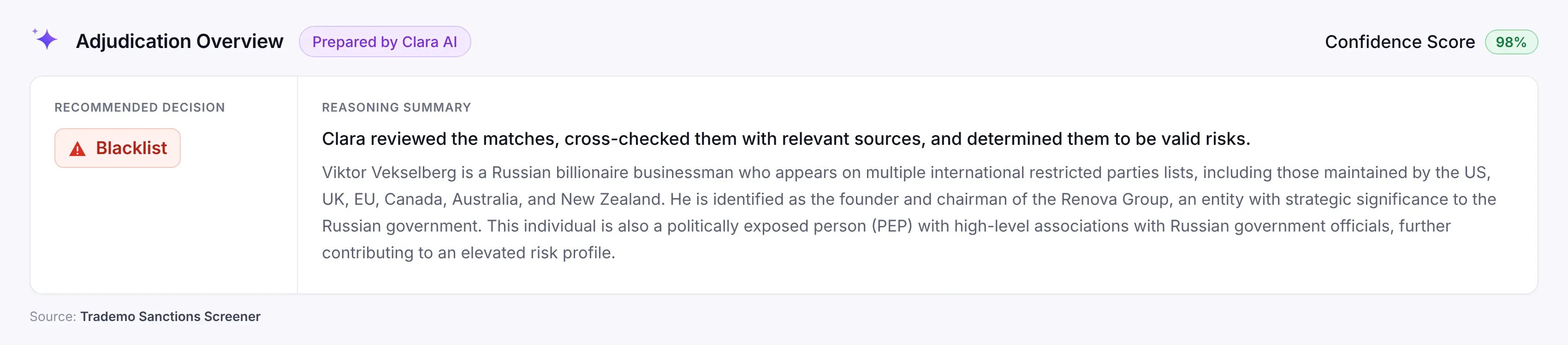
Sanctions were once blunt instruments aimed at whole countries. Today they target named individuals, and named individuals rarely hold assets in their own name. Under OFAC's 50% Rule, every entity a designated person owns at 50% or more, alone or together with other designated persons, is blocked by law. No public register lists those entities. Banks are expected to find them on their own.
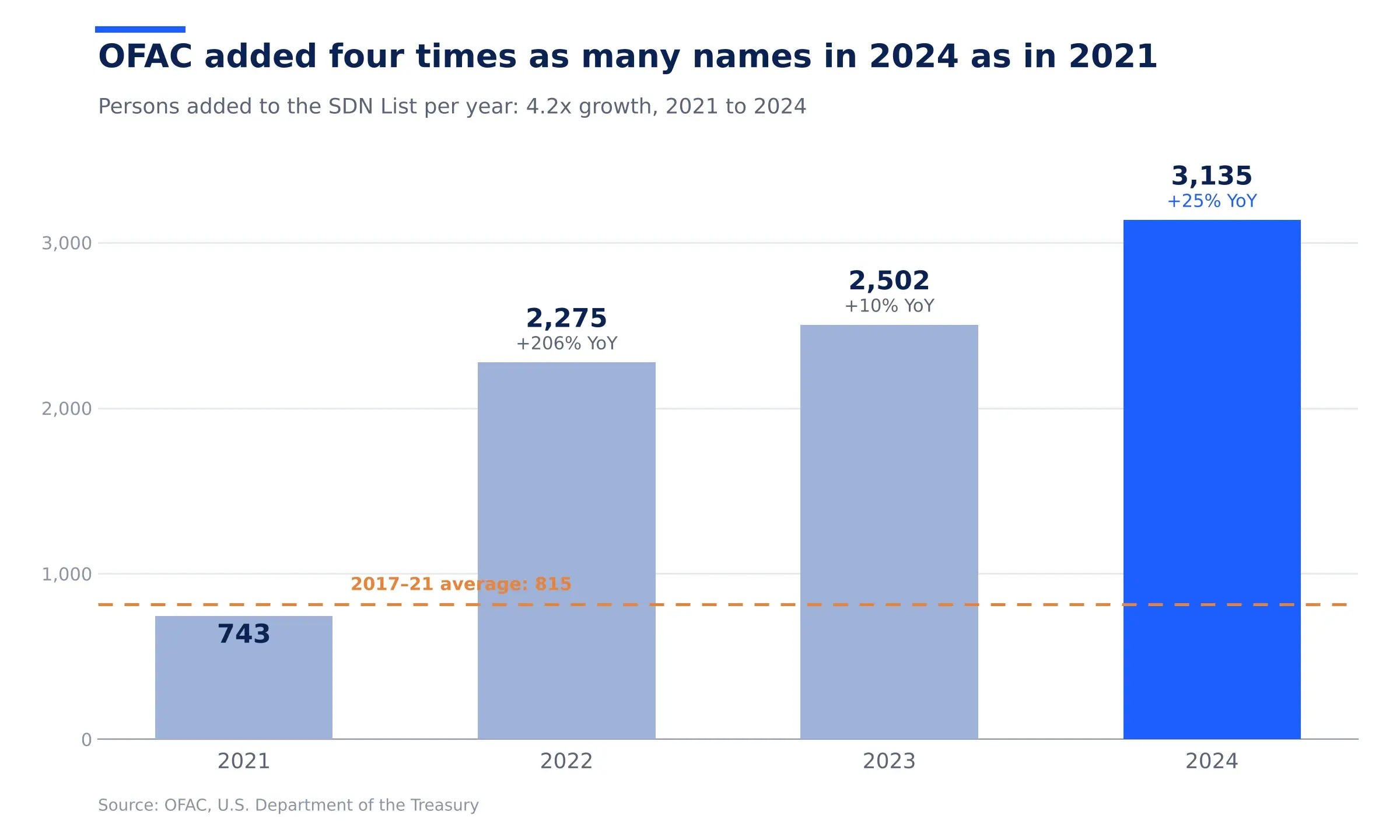
The list itself is growing faster than ever. Russia alone accounted for 1,698 of 2022's additions and 70% of 2024's. Every new name can silently block a string of companies that will never appear on any list.
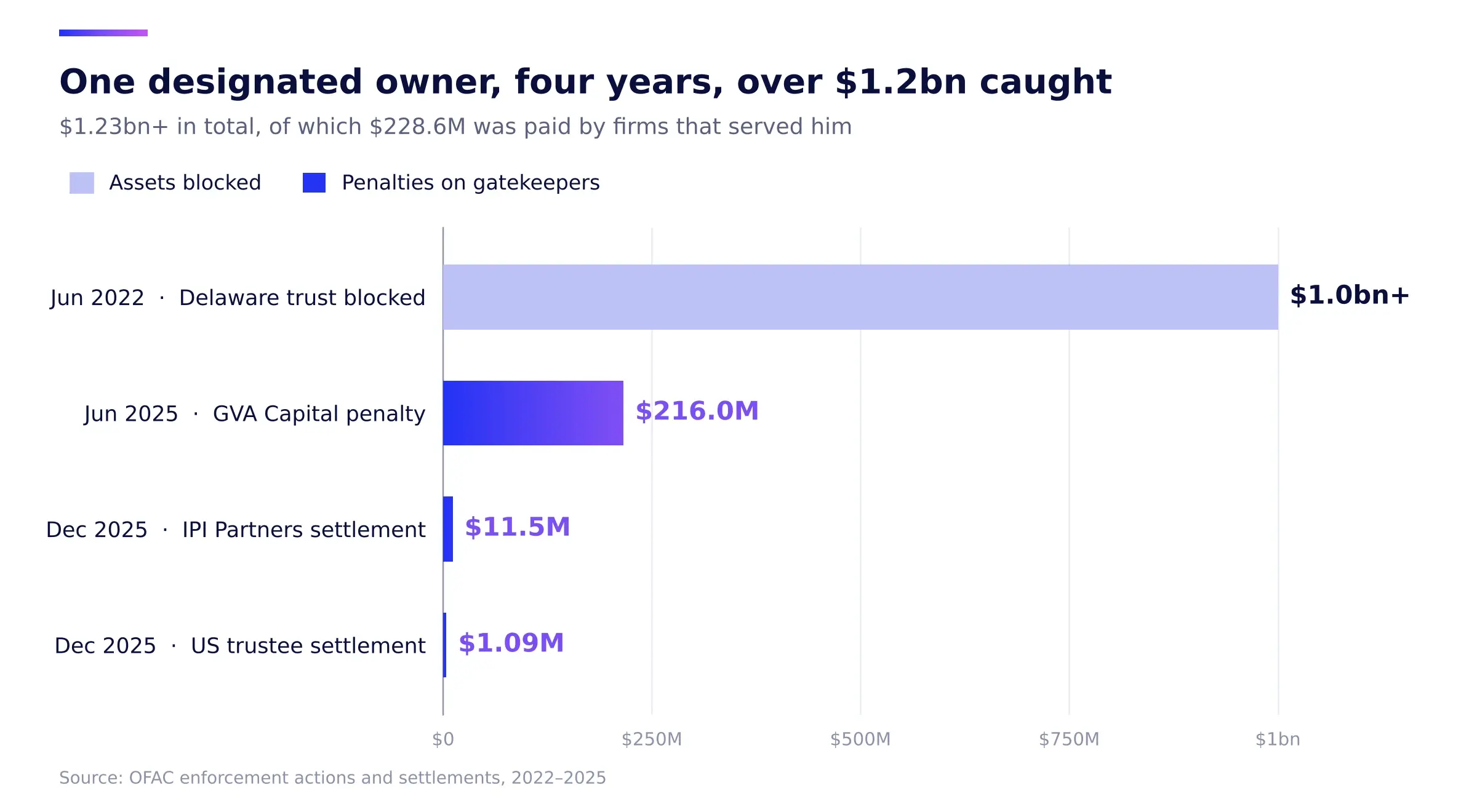
The stakes are not theoretical. Within a year of Russia's invasion of Ukraine, the multinational REPO Task Force reported more than $58 billion of sanctioned Russians' assets blocked or frozen, and warned that family members and complex ownership structures had become routine evasion tools. A single Delaware trust, blocked in June 2022, held over $1 billion for a designated oligarch who had never appeared in its paperwork.
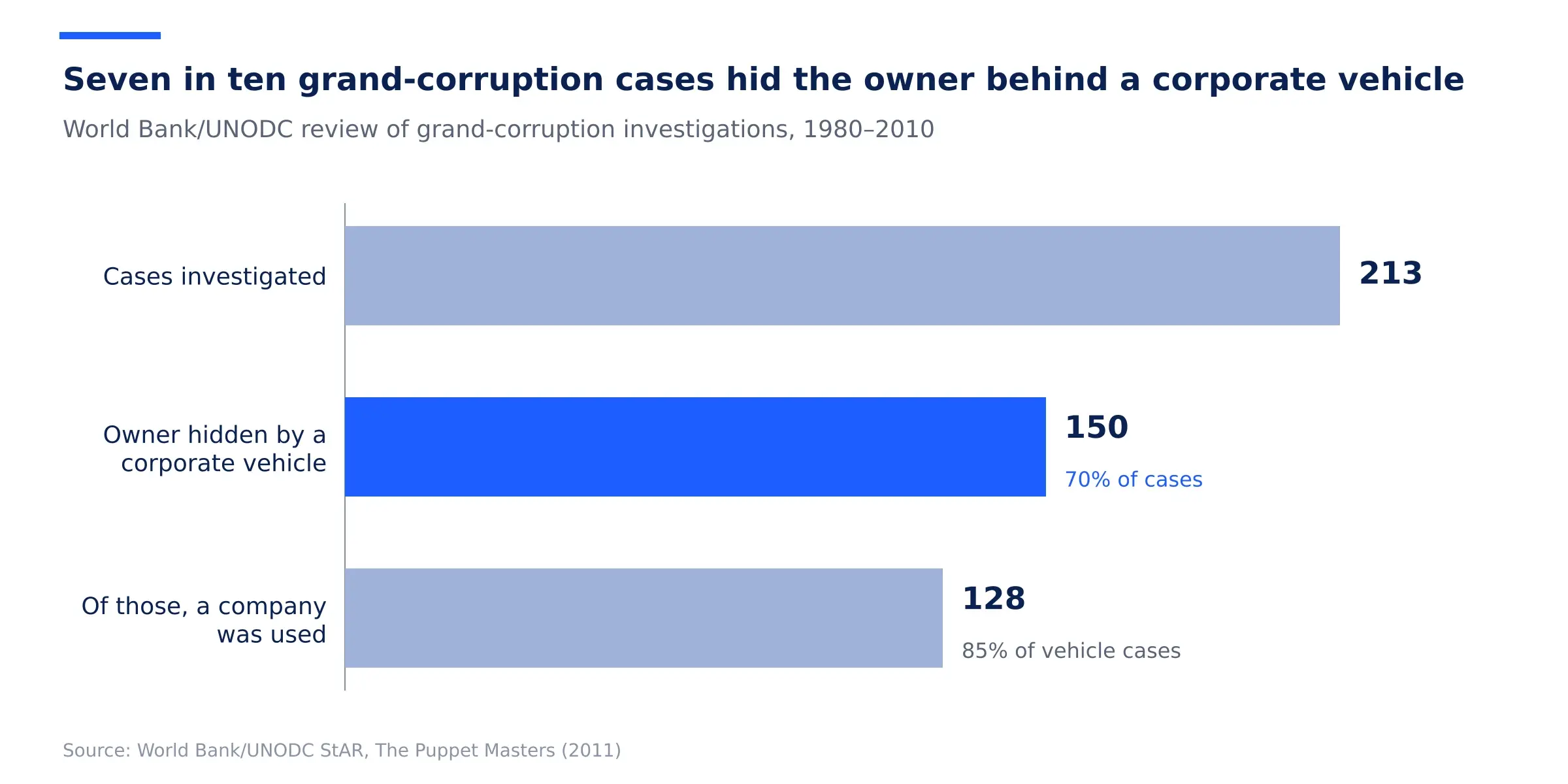
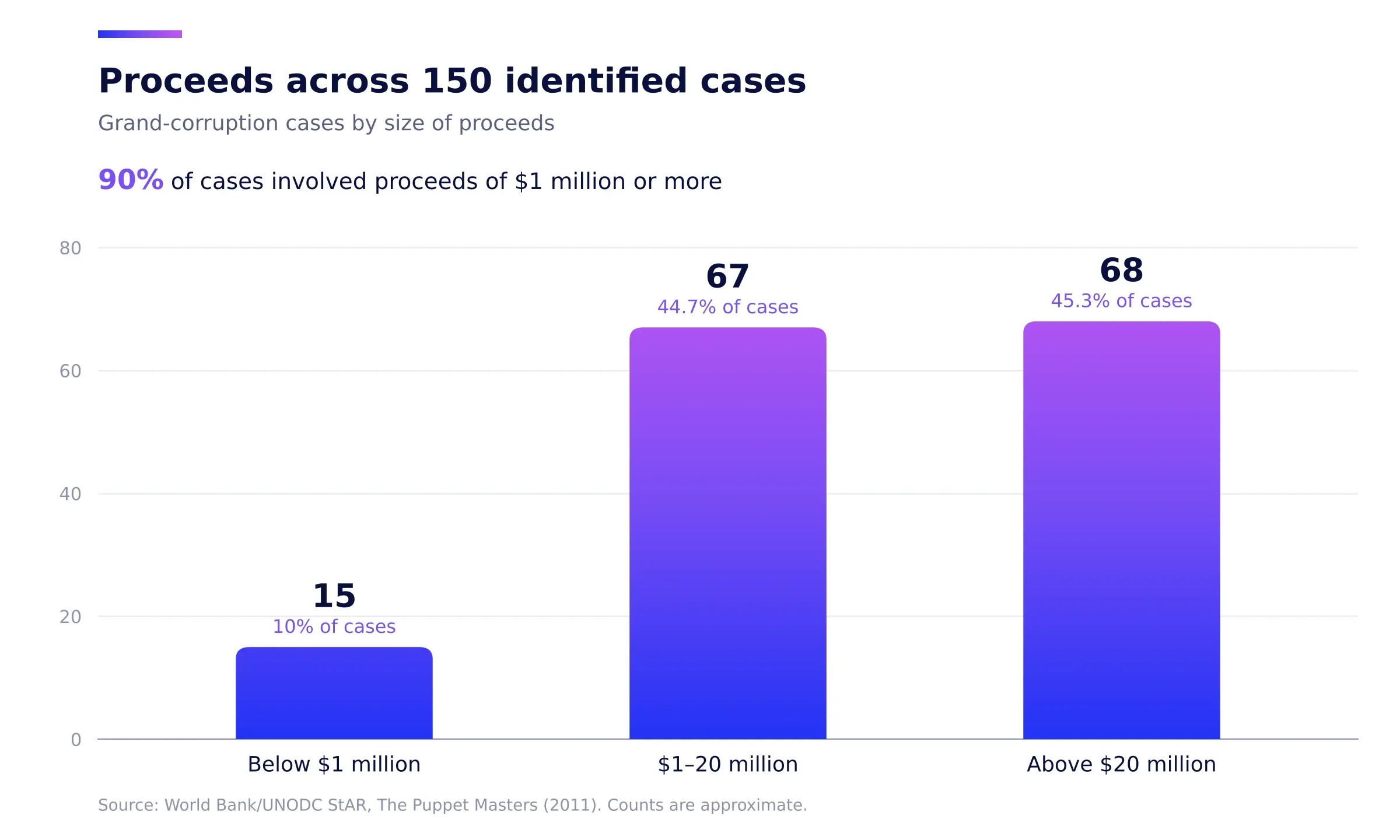
The World Bank/UNODC Puppet Masters study traced $56.4 billion of corruption proceeds hidden behind corporate vehicles.
It covers where the owner goes missing, how the rules unintentionally help, three cases where the trail was deliberately laid, and what it takes to follow that trail to its end.
The Company Passed Screening. The Owner Didn't
Every sanctions programme begins with the same question: is this name on a list? For individuals, it mostly works. For companies, it is the wrong question. Sanctions liability attaches to ownership, and ownership is not printed on a certificate of incorporation.
See it on your own transactions
Screening, examination, and decisioning with AI — inside your trade workflow, with the reasoning attached.