The Safest Paper On The Riskiest Desk
Team ArgusLoop
29 October 2026 · 4 min

Extremely Safe Credit, Exceptionally Fragile Documents
Export letters of credit almost never go bad. The ICC Trade Register's decade of data, nearly USD 15 trillion of exposures across 32 million transactions, puts the export LC default rate at 0.04% for 2008–2018.
Yet the same instrument fails at the first hurdle most of the time. ICC estimates that 65–80% of document sets presented under LCs are refused on first presentation.
Then there is the desk that touches an export LC first. The advising bank earns a modest fee and, under UCP 600, gives no undertaking to pay. It is tempting to run it as a courier service: receive the MT700, forward it, close the file.
The cases in this insight show what that assumption has cost: settlements from USD 5.75 million to USD 553 million, a ₹71 crore sweep across 36 Indian banks, and a USD 85 million hole at HSBC. For banks and FIs the real question is not whether the exporter gets paid. It is whether the bank that advised the credit can defend what it saw at first sight.
The Numbers Behind The Paradox
The gap between credit risk and document risk on an export LC is more than three orders of magnitude.
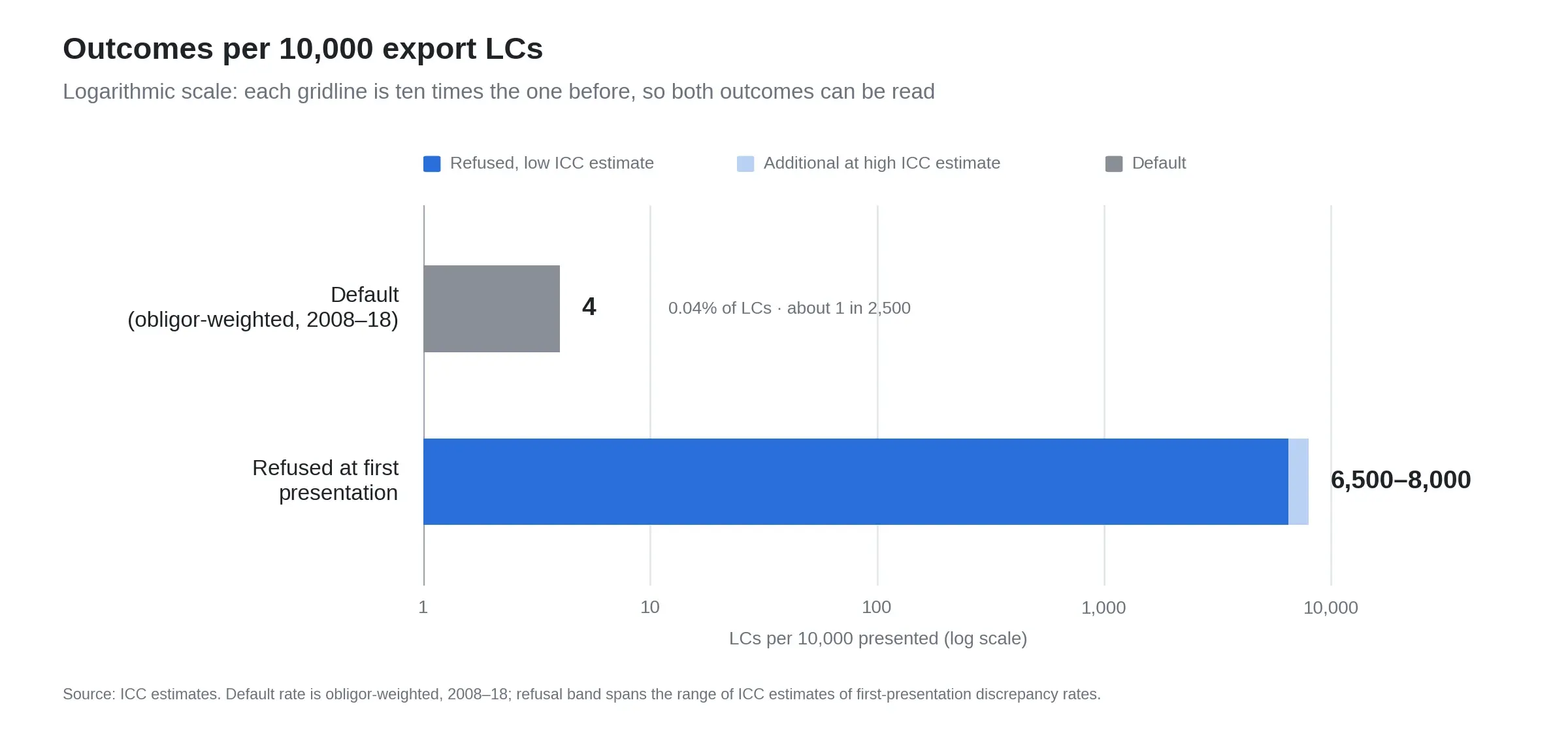
Credit is not where export LC losses come from. Fraud, sanctions and operational failure are, and the advising desk is where they first show up.
Authenticity Is A Duty, Not A Courtesy
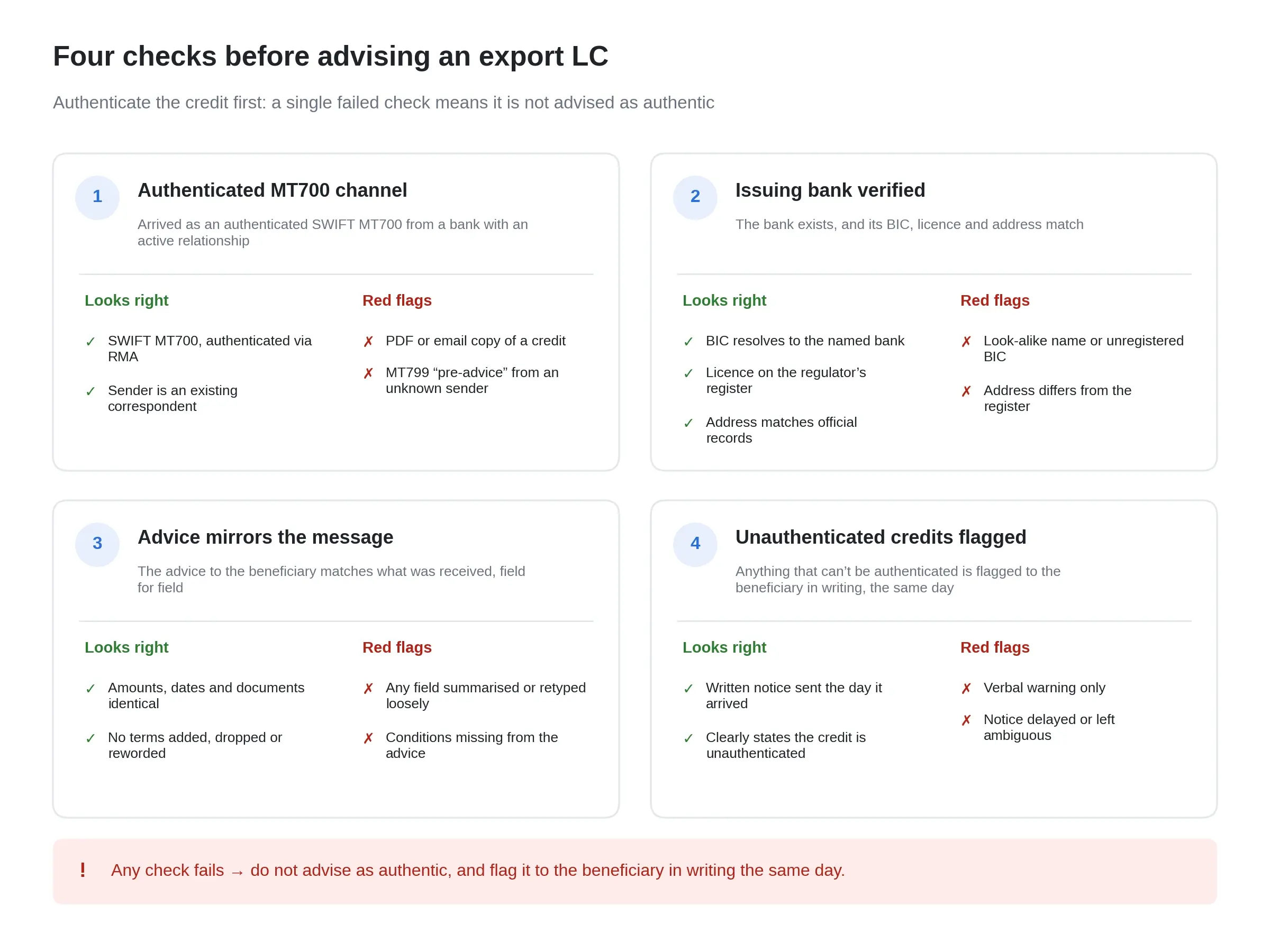
UCP 600 sub-article 9(b) is short and unforgiving. By advising a credit, a non-confirming bank signals that it has satisfied itself as to the credit's apparent authenticity and that its advice accurately reflects the terms received. Under 9(f), if it cannot reach that comfort, it must tell the instructing bank without delay. If it advises anyway, it must warn the beneficiary.
A recent ICC Opinion went further. An advising bank should be satisfied that the sending bank actually exists, and a bare reference to sub-article 9(f) with no explanation is not enough. Under 9(c), a second advising bank owes the same duty for the advice it receives.
When Compliant Clauses Still Leave Room for Risk
Article 9 does not require the advising bank to check whether a credit is workable. Its duties stop at authenticity and accurate advice. That leaves the exporter, and any bank later asked to negotiate, discount or confirm, exposed to clauses that make compliant presentation impossible from day one.
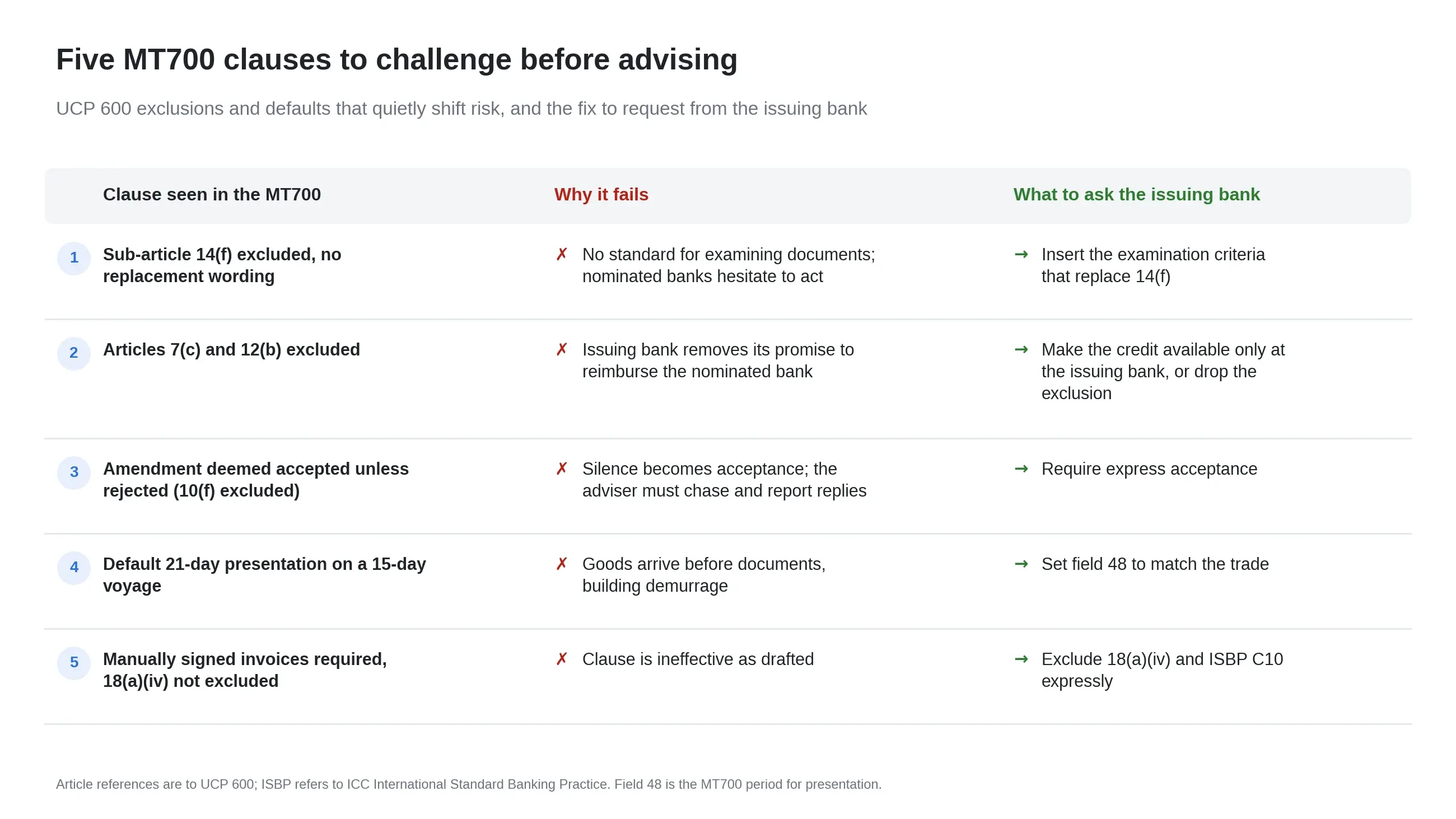
ICC Opinions R634 and R716 urge banks to keep modifications and exclusions to a minimum, because an exclusion usually needs new wording to fill the gap. ICC's 2022 Technical Advisory Briefing adds that timing (expiry, shipment date, presentation period) drives the most common discrepancies. Many of those are seeded at issuance and visible at advising. An adviser that flags them early turns a fee line into a client-retention tool.
Red Flags At First Sight, And What Missing Them Cost
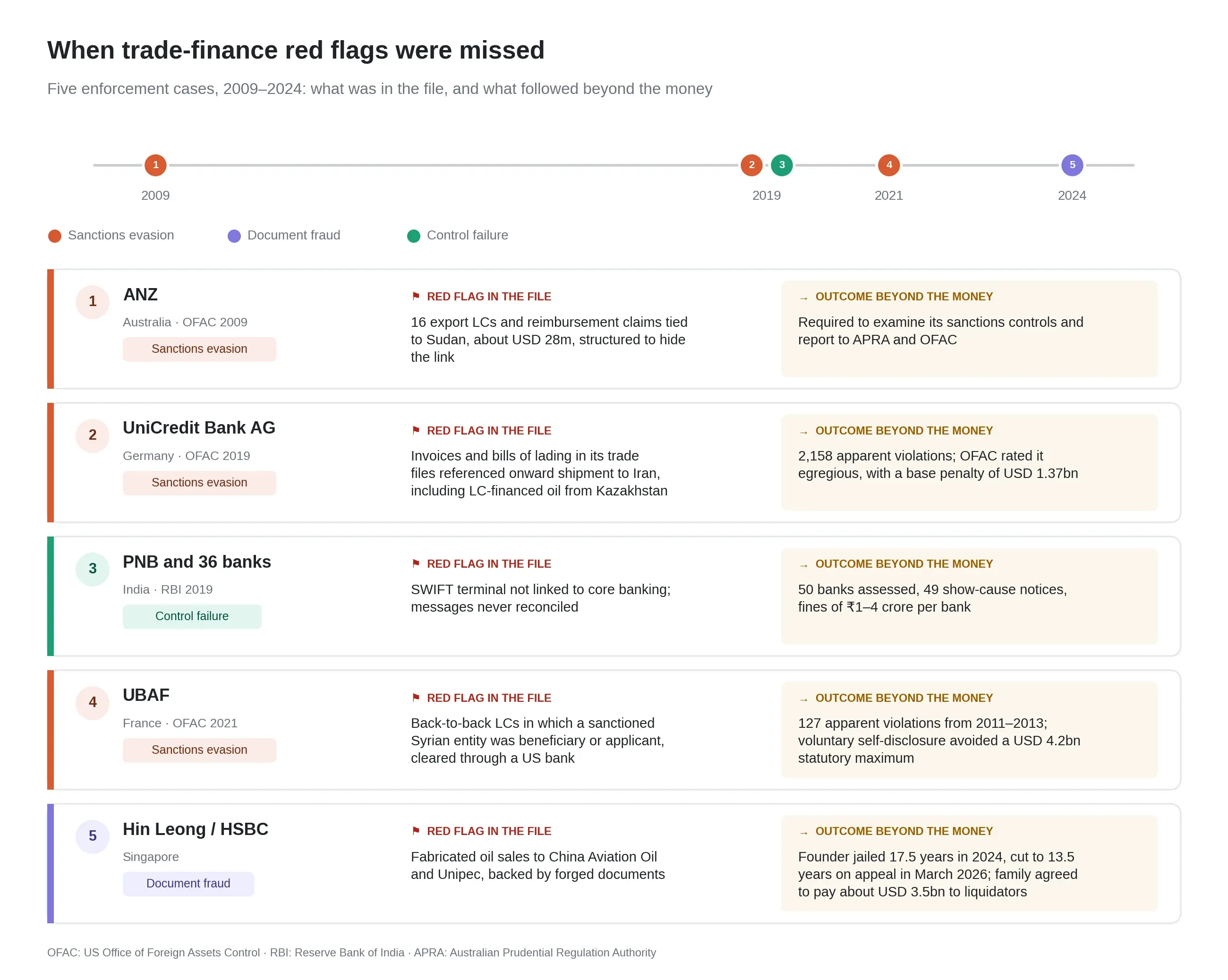
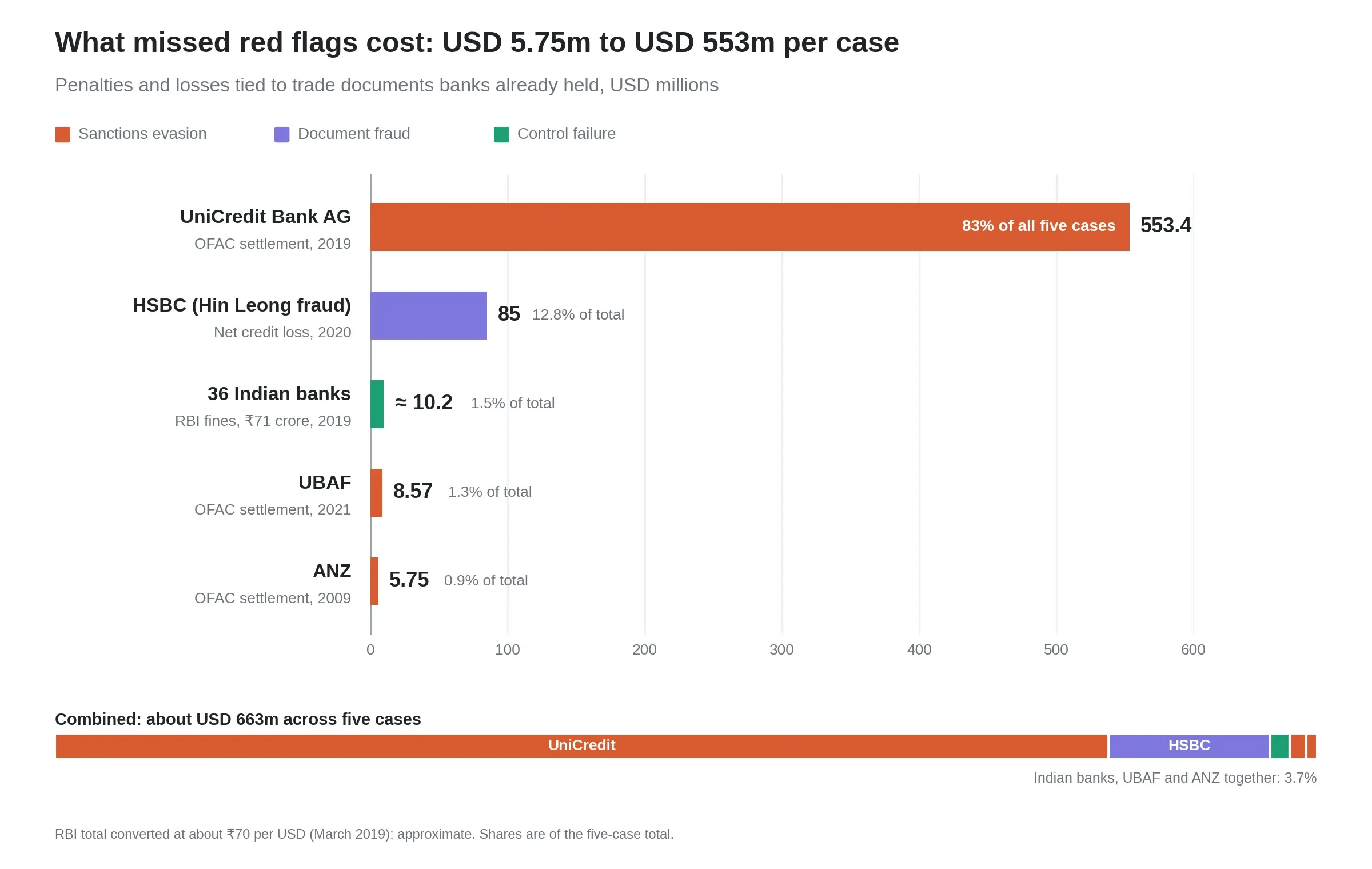
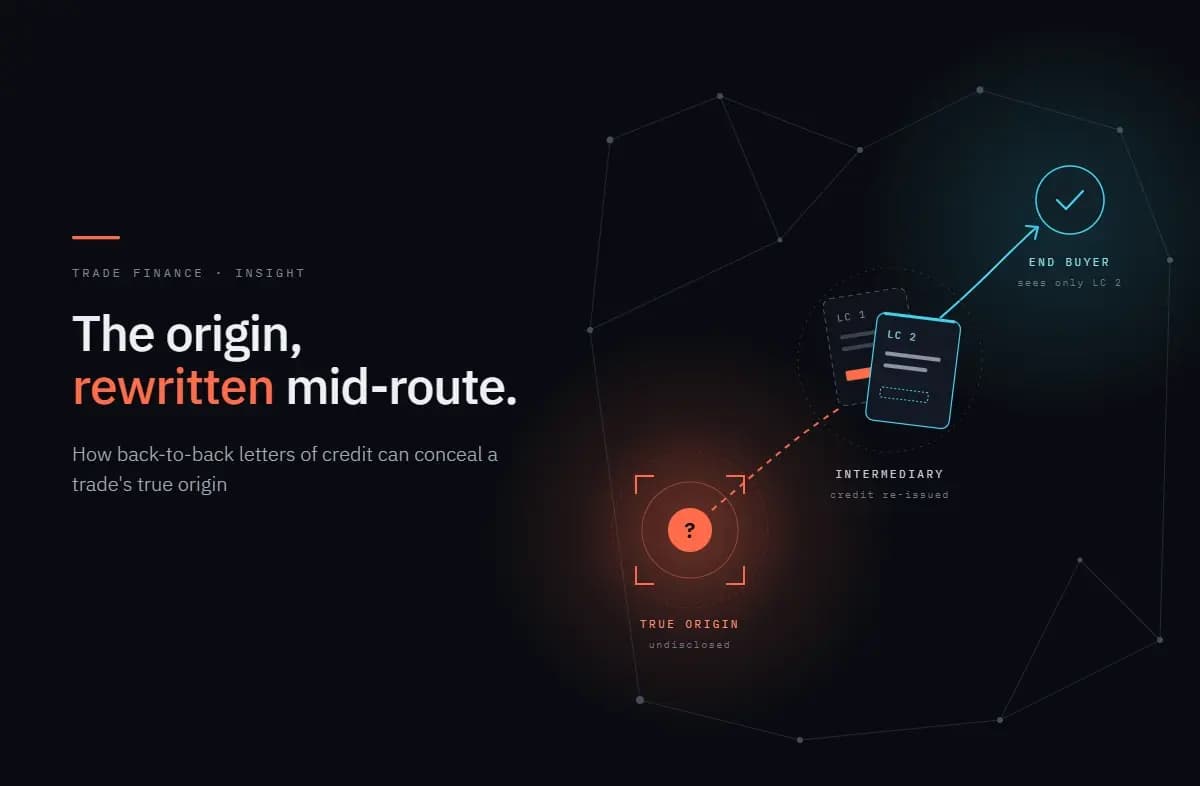
The pattern is consistent. The costliest cases were not exotic frauds but ordinary documents read without curiosity: a port name, a counterparty, a trade structure with no commercial logic. The FATF Egmont risk indicators of March 2021 group such signals into structural, trade activity and trade document and commodity flags, and stress that one indicator alone proves little. At advising, the first-sight questions are simple: does the beneficiary's business match the goods, does the route touch a sanctioned or high-risk port, and does a back-to-back or transferable structure make commercial sense?
The Reversal: When Credit Risk Falls, Operational Risk Takes Over
This insight opened with the claim that export LCs are the safest paper in trade finance. For credit risk, that holds. The 0.04% default rate is exactly why risk moved elsewhere. When the paper rarely fails, the people behind it test the bank instead, through forged documents, cloned messages and sanctioned routes.
None of the largest numbers here (USD 553 million, USD 85 million, USD 7.46 million) came from a buyer who could not pay. They came from banks that did not look, or did not act on what they saw. The "no-undertaking" desk turns out to be the bank's first and cheapest line of defence.
Key takeaway: Treat every advised export LC as a three-gate decision taken within one business day: is it authentic, is it workable, and does anything in it raise a red flag? Each gate costs minutes. Skipping them has cost single banks up to USD 553 million.
Conclusion
Advising an export LC carries no promise to pay, but it always carries the bank's name. Banks and FIs that embed authenticity, workability and red-flag checks at first sight protect exporters, lower discrepancy-driven delays and keep regulators' penalties off their books, turning the lowest-margin trade service into one of its strongest controls.
From Routine Checks to Risk Prevention
The first line of defence in export LC advising begins when the credit reaches the bank not when a discrepancy or fraud comes to light. This is where ArgusLoop’s LC Export Advisory helps banks move beyond routine transmission by structuring the checks required to identify risks before they progress through the transaction lifecycle.
The product focuses on four critical areas:
- Authenticity and field verification: Verify mandatory LC fields, receipt requirements and the apparent authenticity of the credit.
- Content and clause analysis: Identify logical inconsistencies, ambiguous wording and impractical terms that could lead to discrepancies or disputes.
- Compliance and risk screening: Examine sanctions, KYC and other compliance-related red flags that require further scrutiny.
- Amendment and advising validation: Address confirmation-related requirements, second advising bank checks and changes introduced through amendments.
By bringing these checks into the advising workflow, banks can identify potential issues earlier, reduce avoidable discrepancies and delays, and strengthen the auditability of their decisions. The objective is not simply to ensure that an LC is accurately communicated, but to help establish whether its terms are workable and whether any red flags warrant attention before advice is issued. With LC Export Advisory, ArgusLoop aims to transform the advising desk from a passive point of transmission into an active first line of defence where early scrutiny can prevent overlooked risks from becoming costly failures.
See it on your own transactions
Screening, examination, and decisioning with AI — inside your trade workflow, with the reasoning attached.